Explore cutting-edge cooking science and techniques This guide shows beginners how to start molecular gastronomy with a realistic first week, the gear that actually matters, and mistakes to skip. Difficulty: advanced. Category: Cooking.
Why try Molecular Gastronomy
- Molecular Gastronomy is a cooking hobby you can begin without a huge commitment.
- A advanced path means you can get a first result using Molecule-R Cuisine R-Evolution Molecular Gastronomy Kit.
- Major Hobbies curates three kits so you buy what you need for Molecular Gastronomy, not a whole store aisle.
Starter kits
Some links are Amazon Associates links. We may earn a commission at no extra cost to you.
Budget
Budget Starter
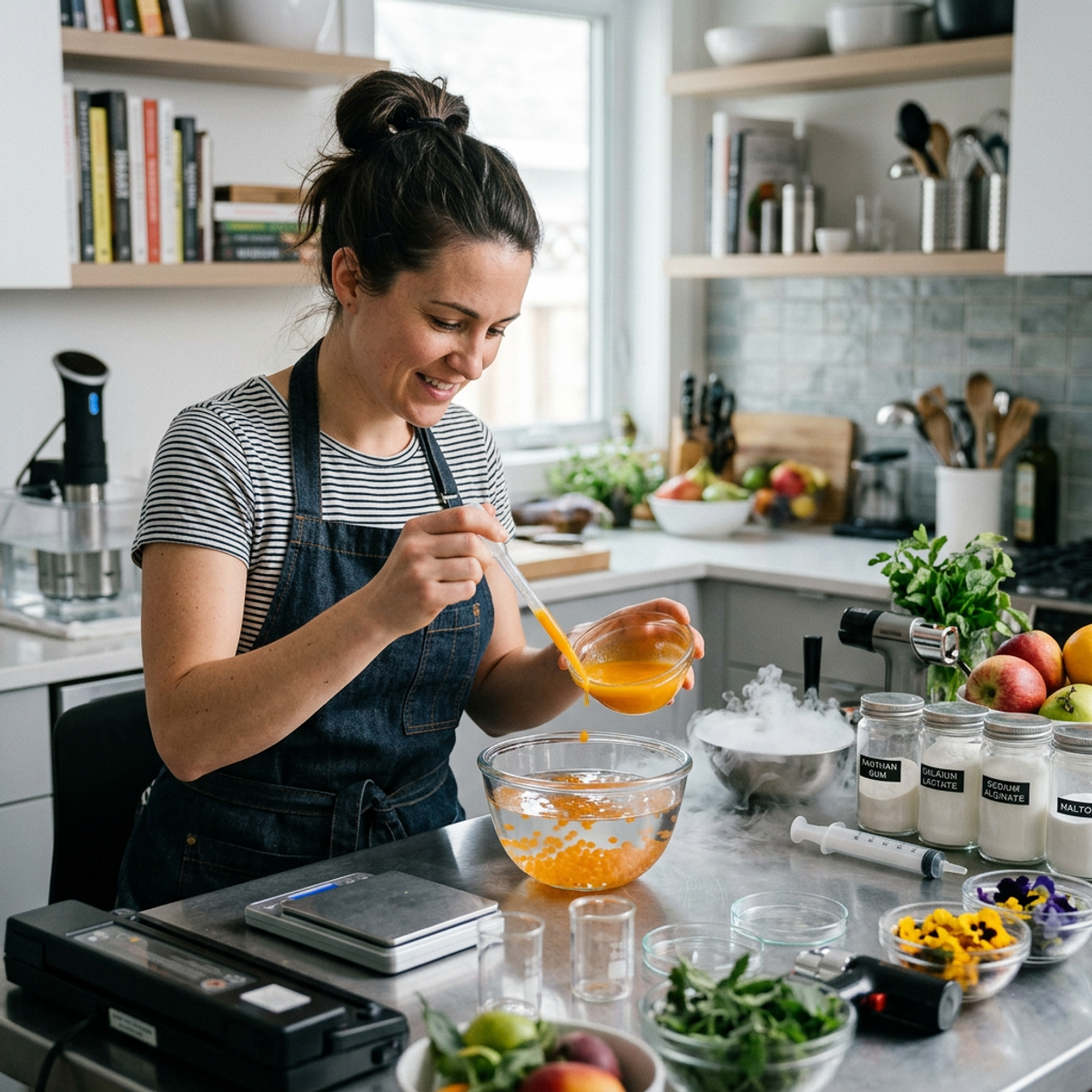
Entry-level molecular gastronomy kit with essential chemicals and basic tools to experiment with spherification, gels, and foams at home.
$115-$150 estimated
- Molecule-R Cuisine R-Evolution Molecular Gastronomy Kit$38
Includes sodium alginate, calcium chloride, soy lecithin, agar agar, and basic tools — perfect all-in-one starter kit
Amazon (affiliate)
- Cuisinart CSB-179 Smart Stick Immersion Blender$35
Essential for creating foams, emulsions, and blending gels smoothly
Amazon (affiliate)
- OXO Good Grips 3-Piece Stainless Steel Mixing Bowl Set$28
Needed for mixing hydrocolloid baths and staging spherification
Amazon (affiliate)
- American Weigh Scales Gemini-20 Portable Milligram Scale$22
Precision scale critical for measuring hydrocolloids and additives in tiny quantities (0.001g accuracy)
Amazon (affiliate)
- Norpro Stainless Steel Measuring Spoons Set of 6$10
Includes 1/8 tsp and 1/4 tsp for measuring small amounts of specialty chemicals
Amazon (affiliate)
Mid-range
Mid-Range Enthusiast
A more complete setup with individual food-grade chemicals, a proper immersion circulator for sous vide, and precision tools for intermediate-level techniques.
$300-$370 estimated
- Anova Culinary AN400-US00 Nano Sous Vide Precision Cooker$99
Opens up sous vide cooking, a cornerstone of modern molecular cuisine; precise temperature control
Amazon (affiliate)
- Modernist Pantry Molecular Gastronomy Starter Pack (Agar, Carrageenan, Methylcellulose, Xanthan, Lecithin)$65
Individual food-grade hydrocolloids in larger quantities for serious experimentation beyond a kit
Amazon (affiliate)
- Breville BSB510XL Control Grip Immersion Blender$80
More powerful than entry-level blenders; better for stable foams and smooth emulsions
Amazon (affiliate)
- Escali Primo P115C Digital Kitchen Scale$25
0.1g accuracy for everyday measurements; pair with a milligram scale for precise additives
Amazon (affiliate)
- Tovolo Sphere Ice Molds + Silicone Mold Set (Half-Sphere, Dome)$22
Used for setting gels, agar spheres, and plating modern desserts
Amazon (affiliate)
- The Fat Duck Cookbook / Modernist Cuisine at Home (Hardcover)$45
Comprehensive reference for techniques, ratios, and recipes for home molecular cooks
Amazon (affiliate)
Premium kit (not a paid feature)
Premium Professional
Professional-grade setup including a chamber vacuum sealer, anti-griddle alternative, high-end circulator, full chemical pantry, and ISI siphon for restaurant-quality results.
$1320-$1620 estimated
- PolyScience Creative Series Immersion Circulator (120V)$349
Professional-grade circulator trusted by chefs; precise to ±0.07°F — the gold standard for sous vide
Amazon (affiliate)
- VacMaster VP215 Chamber Vacuum Sealer$350
True chamber vacuum sealer for infusions, compression, marination, and sealing liquids — not possible with edge sealers
Amazon (affiliate)
- iSi Gourmet Whip Plus 1-Quart Cream Whipper$130
Restaurant-standard siphon for espumas, foams, and rapid cold-infusions with N2O chargers
Amazon (affiliate)
- Modernist Pantry Pro Chemical Kit (Methylcellulose, Activa RM Transglutaminase, Sodium Alginate, Carrageenan, Kuzu, Lecithin, Xanthan — 10-pack)$95
Full suite of professional hydrocolloids and enzymes including meat glue (Activa RM) for advanced techniques
Amazon (affiliate)
- Ohaus Scout SPX222 Precision Balance Scale (220g x 0.01g)$95
Lab-grade precision scale for exact measurements of chemicals down to 0.01g
Amazon (affiliate)
- Vitamix 5200 Blender Professional Grade$450
Workhorse blender for ultra-smooth purees, hot soups, and emulsions; runs at temperatures safe for gels
Amazon (affiliate)
Your first week of Molecular Gastronomy
- Day 1: Read this page and pick the budget kit for Molecular Gastronomy. Order or borrow Molecule-R Cuisine R-Evolution Molecular Gastronomy Kit.
- Day 2: Set up a small space. Watch one beginner demo specific to Molecular Gastronomy.
- Day 3: Do a 20–30 minute first session. Goal: finish something tiny, not perfect.
- Day 4: Rest or review notes. Log the session in Major Hobbies Track.
- Day 5: Second session. Repeat yesterday, 10% slower and cleaner.
- Day 6: Join the Molecular Gastronomy community or find a spot Near You.
- Day 7: Share one photo or note of what you made. Plan week two.
Tips
- Start with Budget Starter before upgrading.
- Protect your time: two short Molecular Gastronomy sessions beat one exhausted marathon.
- Take a photo of your setup so you can reset it next time.
- Ask one question in Community instead of buying more tools.
- If you stall, drop difficulty, not the hobby.
FAQ
How much does it cost to start Molecular Gastronomy?
Most beginners start around $115-$150 with the Budget Starter. Mid and premium kits exist when you know you will stick with Molecular Gastronomy.
Is Molecular Gastronomy good for beginners?
Molecular Gastronomy is listed as advanced, but you can still start with the budget kit and a short first week.
What do I need for Molecular Gastronomy?
Open the three starter kits on this page. The budget list is the honest minimum for Molecular Gastronomy.
Where can I do Molecular Gastronomy near me?
Use Near You on this page or majorhobbies.com/near?q=Molecular%20Gastronomy to find classes, studios, and venues.